Nearly every beer ever brewed falls into one of two families. Not by colour, not by strength, and not by how it looks in the glass — by yeast.
Once that distinction clicks, a confusing wall of taps turns into something you can actually navigate.
One difference, and it is the yeast
Ales are made with yeast that works warm, somewhere around 15–24°C, and gathers near the top of the vessel as it ferments. Brewers call it top-fermenting. It works fast, often finishing in a few days.
Lagers use yeast that works cold, nearer 7–13°C, and settles to the bottom. Then the beer rests cold for weeks. Lagern is German for "to store", and the storing is the whole idea.
That is the entire distinction. Everything else follows from it.
What the temperature does to the taste
Warm yeast is busy yeast. Along with alcohol it throws off esters and phenols — compounds that read as fruit and spice. The banana-and-clove note in a German wheat beer is not an added flavouring; it is the yeast, warm and left alone.
Cold yeast is quieter. It produces far fewer of those compounds, and the long cold rest lets the rough edges settle out. What is left is the malt and the hops, with very little between you and them.
Hence the shorthand: ales taste of fermentation, lagers taste of ingredients.
It also explains why lagers are harder to brew well. There is nowhere to hide. An ale's yeast character will paper over a small flaw; a pilsner will show you everything.
Two things that are not the difference
Colour. The most common misreading. Guinness is a dark ale, but Munich dunkel and schwarzbier are dark lagers. Meanwhile plenty of ales are pale gold. Colour comes from how the malt was kilned — nothing to do with the yeast.
Strength. Ales are not inherently stronger. A strong lager can sit comfortably above many ales, and English session bitters are often weaker than the lager in your fridge. Strength comes from fermentable sugar, not family.
Where Caldera's beers sit
Our range spans both families, which was not an accident.
| Beer | Family | Style |
|---|---|---|
| Witbier | Ale | Belgian-style wheat beer |
| Blue | Lager | German-style pilsner |
| Strong | Lager | Strong lager |
| Hefeweizen | Ale | German-style wheat beer, on tap only |
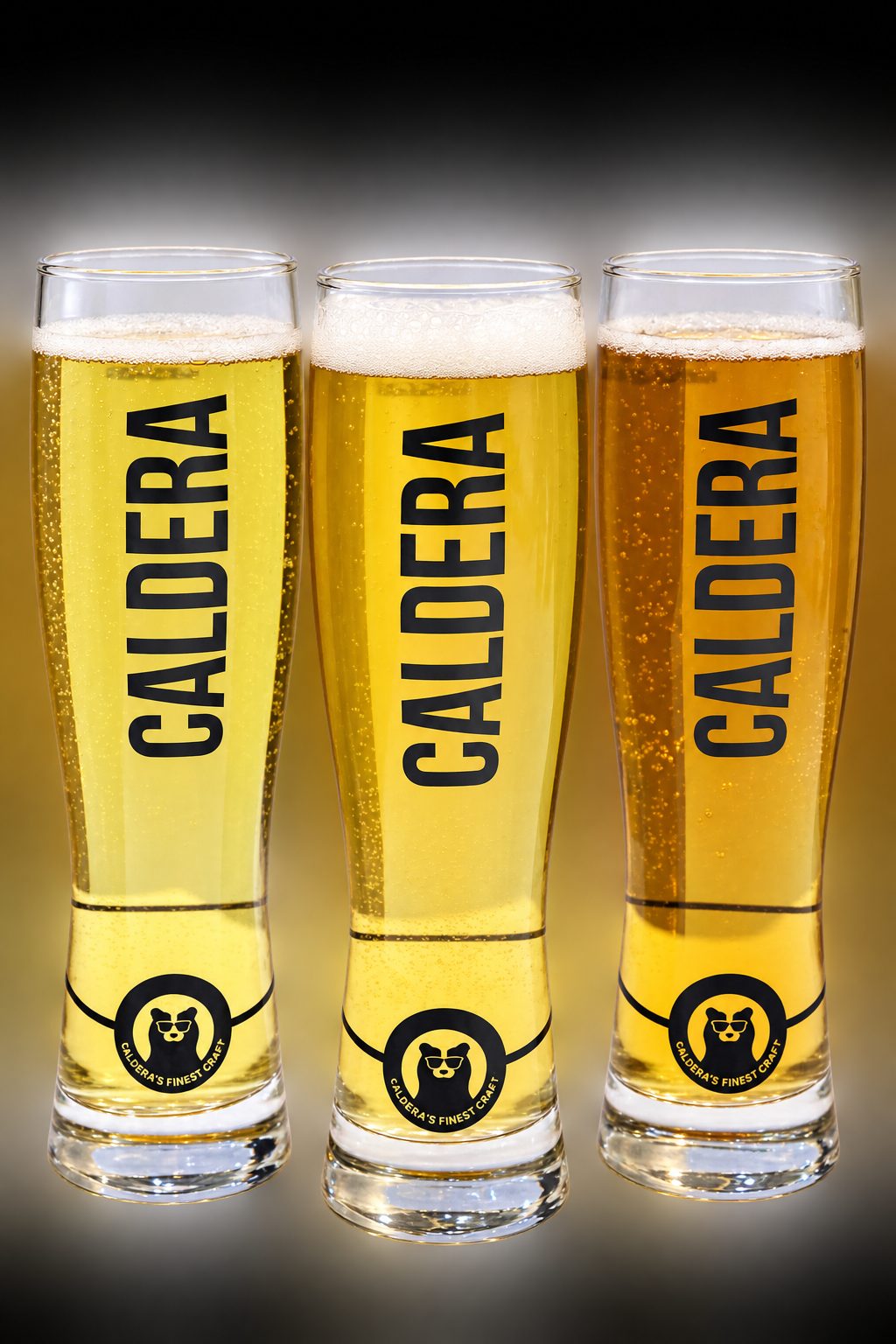
Witbier is the clearest illustration of ale character — the citrus and spice are the yeast doing its warm, expressive work. Blue is the opposite discipline: cold-fermented, cold-rested, and deliberately clean.
Try them side by side some evening. The gap between the two is the whole lesson, and it lands faster in a glass than on a page.
Hybrids, for completeness
A few styles sit awkwardly between the families, because brewers enjoy complicating things. Kölsch is fermented warm like an ale and then cold-conditioned like a lager. German altbier does much the same. California common runs lager yeast at ale temperatures.
They are the exceptions that prove the rule — and they are worth seeking out precisely because they refuse to pick a side.
The short version
Warm yeast, top of the vessel, fast, fruity and expressive: ale. Cold yeast, bottom of the vessel, slow, clean and precise: lager. Colour and strength tell you nothing about which is which.
That is genuinely most of what there is to it. The rest is just drinking enough of both to know which you reach for — and you can see where to find ours on the Where to Find page.
Consumption of alcohol is injurious to health. Not for sale to persons below 21 years. For sale in West Bengal only. Please enjoy responsibly.
Where to Find Caldera